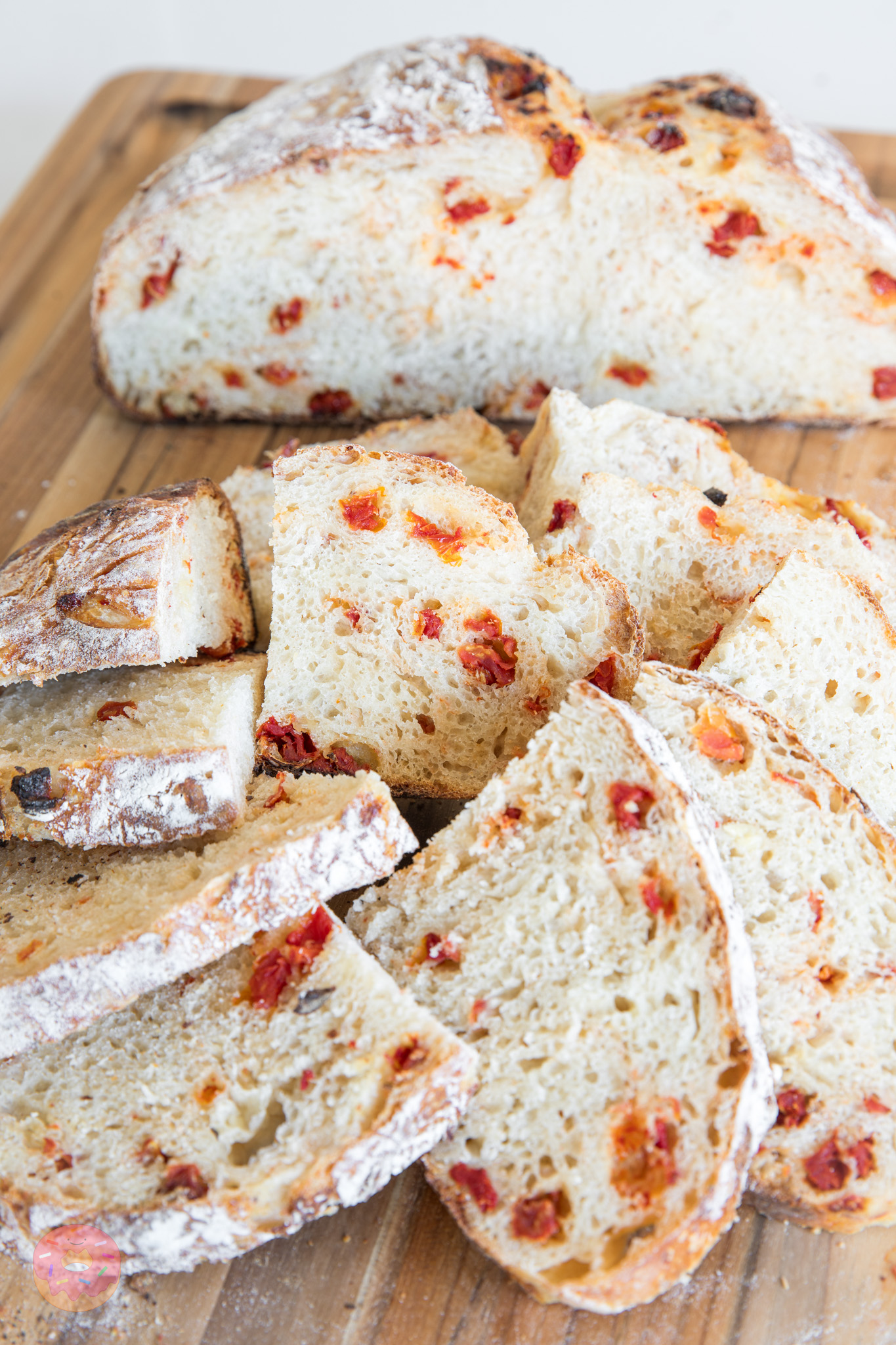
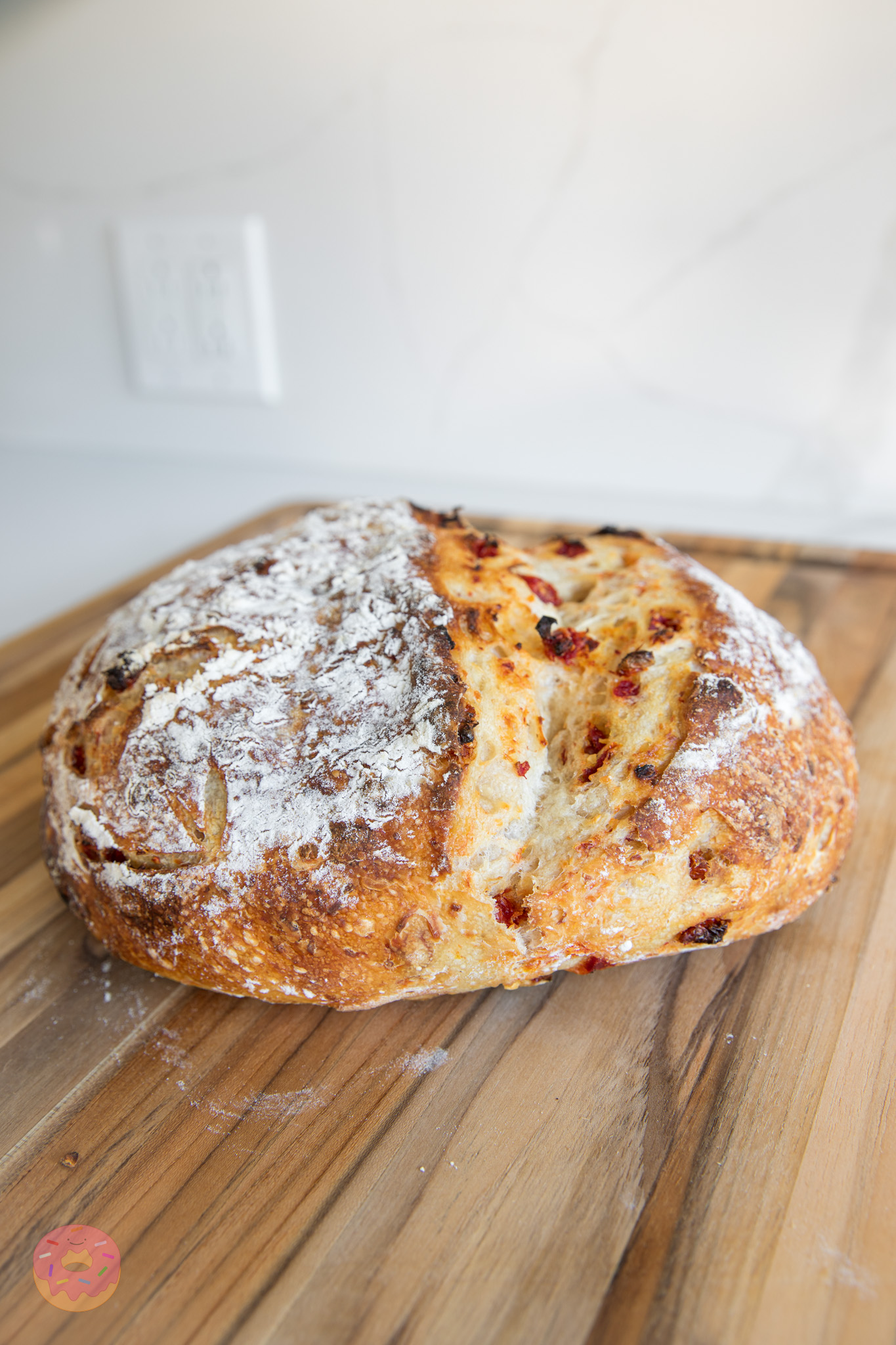
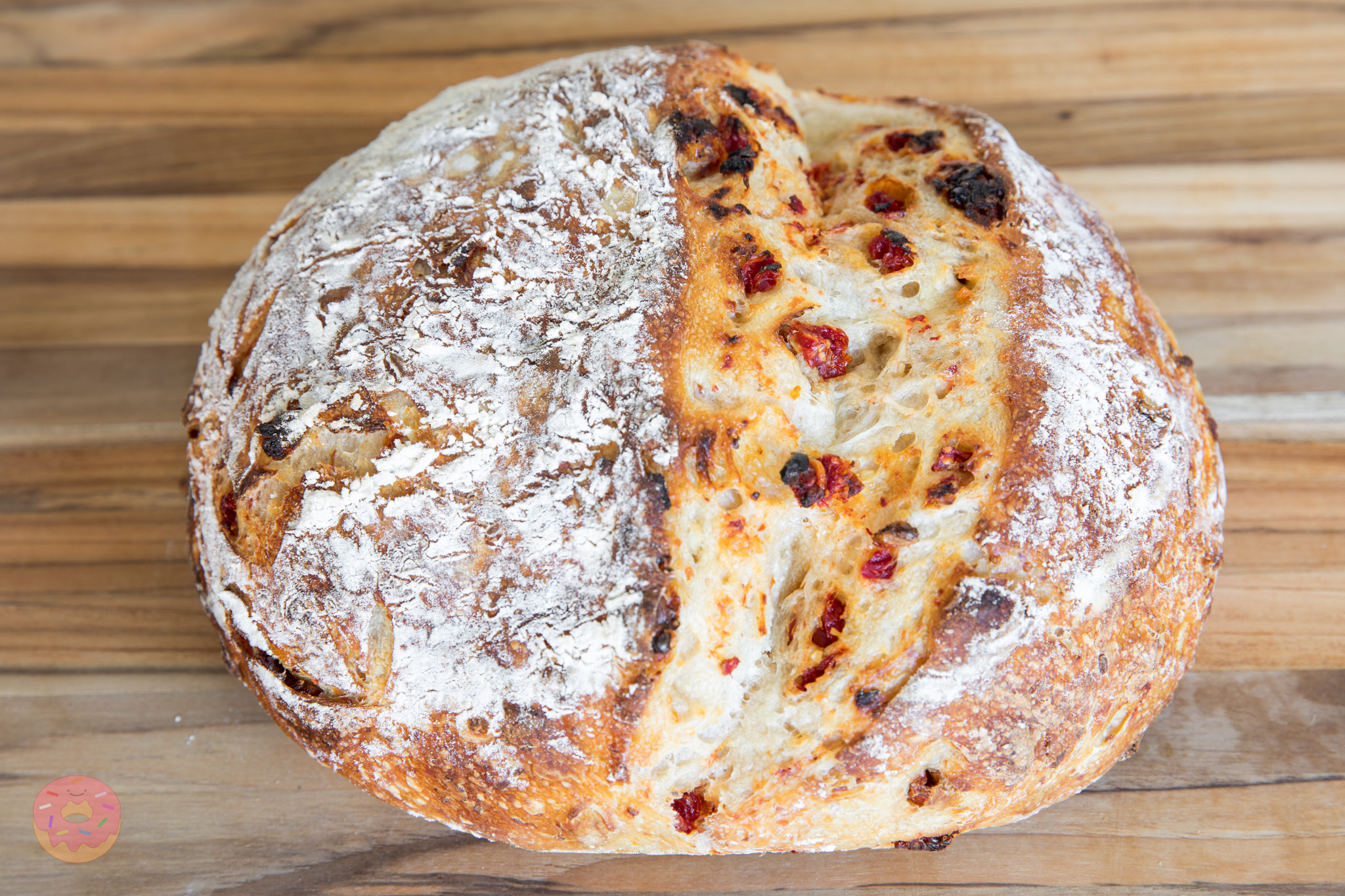
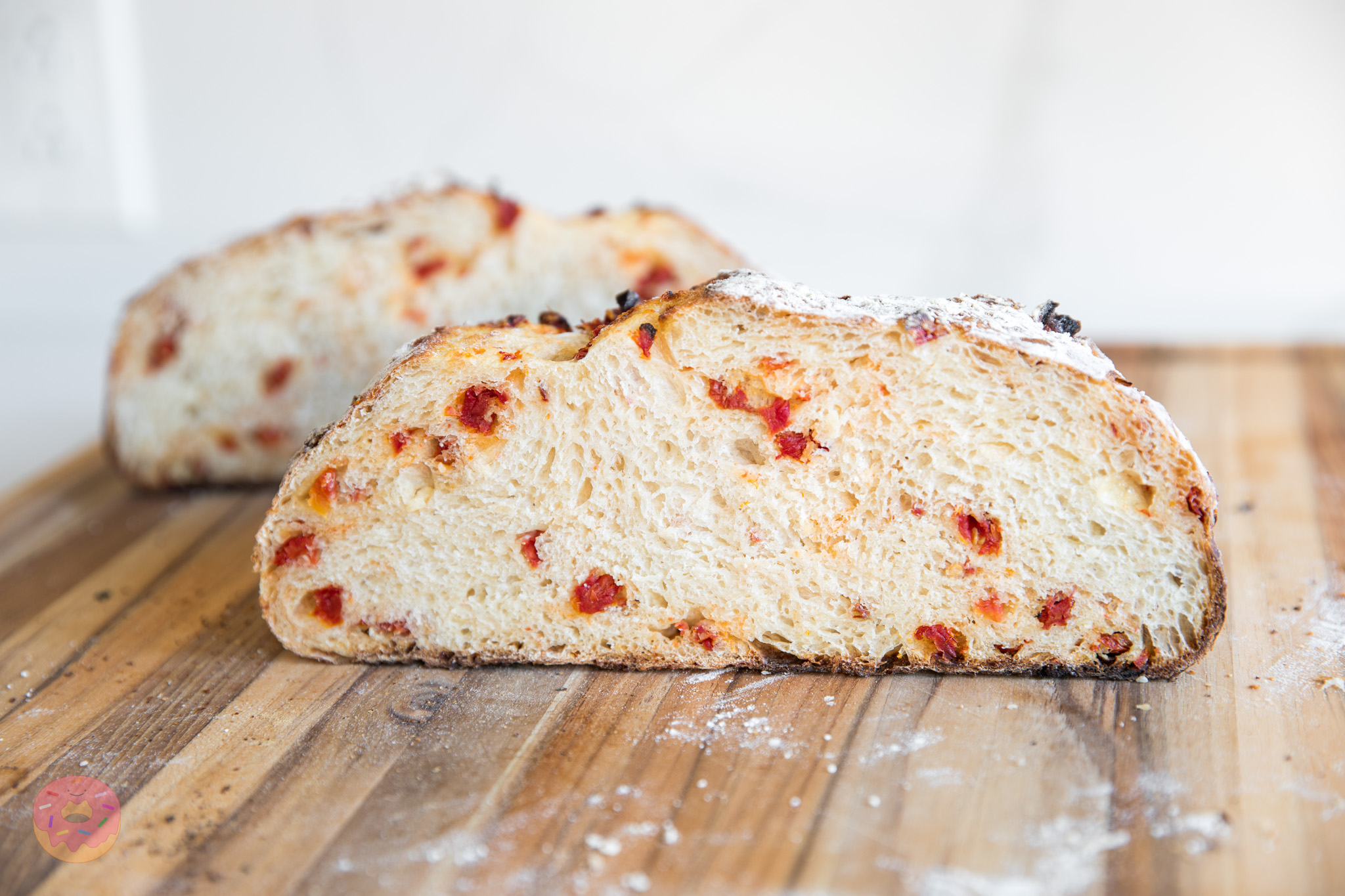
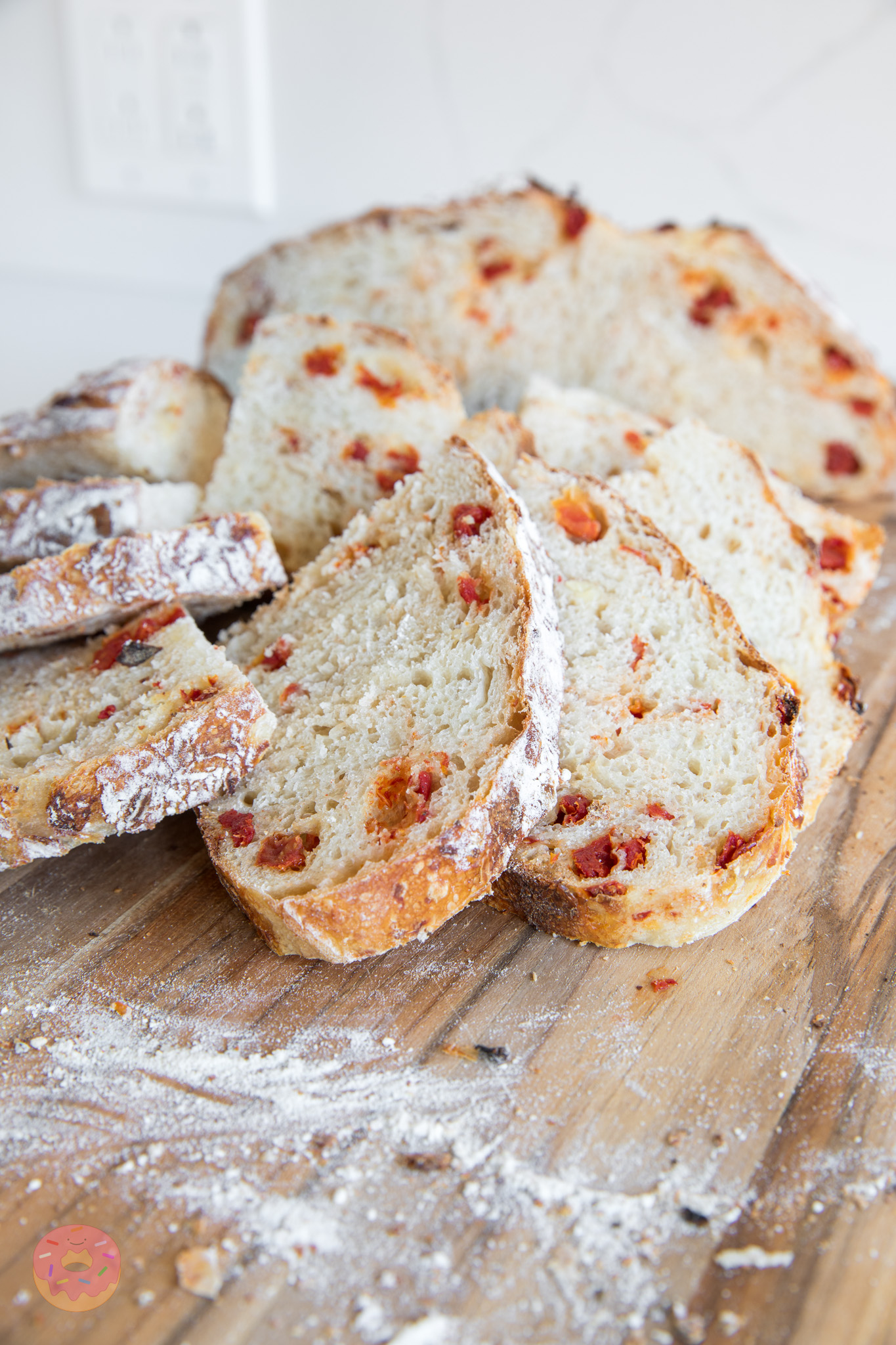
Once you’ve mastered the art of Homemade Sourdough, you may want to try your hand at leveling up with mix-ins. Nearly a year after my first actually successful loaf, I finally decided it was time to be adventurous. It seems scary to introduce new variables into a process that can be finicky and take a wrong turn at any point, but the gamble is definitely worth it. This Sundried Tomato Garlic Sourdough is one of the first two flavor variations I made and already regard it as a favorite.
Sweet, tangy sundried tomatoes, punchy garlic, and a hint of parmesan beautifully enhance the crusty, chewy dough. This loaf is so good it will make your house smell like a pizza parlor; it literally smells and tastes like a fresh, warm pizza right out of your own oven. The tomatoes are definitely the star here and baking them into the bread brings out their lovely sweetness and plump texture. A complementary dash of fresh minced garlic and sprinkling of parmesan cheese invokes the feeling of a delicious marinara sauce.
Once this thing is out of the oven, it’s extremely difficult to wait out the obligatory one hour before ripping into it. And then it becomes an even bigger challenge not to inhale it all in its fresh-baked glory. It’s seriously and disarmingly irresistible. I wasn’t expecting to love it THIS much, especially since there was a classic Rosemary Olive loaf variant that I already knew was going to be a hit. They’re both delicious, but this was a pleasant surprise. If you manage to save some, eat it alongside almost any soup, shashuka, or as the vehicle for a gourmet grilled cheese sandwich, like this Pesto Grilled Cheese.
In a large bowl, mix the starter with water until it’s dissolved and milky. Add in the flour and salt and mix until combined into a sticky, shaggy dough ball.
BulkFermentation: Cover the bowl with a dish cloth or plastic and set aside for 1 hour. Document the time your dough was formed; this marks the start of the bulk fermentation stage.
After one hour, do your first set of stretch and folds. Slightly wet your hands. Starting at the top (12 o’clock position) of the bowl, reach under the dough, lift and stretch it as much as you can without breaking it, and fold it across to the opposite side of the bowl (6 o’clock position). Rotate the bowl 90° and repeat 3 more times. Cover the bowl and set aside for 30 minutes.
Repeat the stretch and folds every 30 minutes 4 more times, for a total of 5 sets. During the 3rd set of stretch and folds, sprinkle some of the sun-dried tomatoes, garlic, and parmesan over the top of the dough before stretching, then fold over. Repeat with the remaining sundried tomatoes, garlic, and parmesan, gently smoothing the toppings into the dough ball as needed.
After the last set of stretch and folds, cover and set the dough aside and allow to ferment for the remaining 2 hours (about 5 hours total from the time the dough was first mixed) or until your dough has doubled in size, is jiggly, has bubbles throughout and it is no longer (or very slightly) sticky to the touch.
Preshaping: Once ready, gently dump out the dough onto your clean, dry working surface and begin slap and folding the dough until it becomes smoother. Do this by picking up the dough from the top third with one hand on either side, slapping the bottom onto your work surface and folding the top over. Do this a few times until smooth, being careful not to overhandle the dough.
Then tension pull the dough by cupping your hands around it and dragging it on the work surface until a tight, smooth ball forms. Cover with a dish cloth and rest for 15-20 minutes. Lightly flour the banneton.
Shaping: Lightly flour the work surface and using a bench scraper, pick up the dough and place it on the floured area with the smooth side (top) down. Stretch the dough out into a rectangle as thin as you can then fold the top third down and the bottom third up over it. Roll it up like a burrito, pinching the sides closed, then tension pull into a nice smooth ball once more.
Pick up the dough with the bench scraper and place it in the banneton with the top side down. Pinch the seams closed on the bottom then cover with a dish cloth or plastic and transfer to the fridge for cold fermentation.
ColdFermentation: Chill the dough in the fridge for 12-48 hours or longer, if desired.
One hour before baking, place the Dutch oven in the oven and preheat at 500°F for 1 hour.
Once preheated, remove the dough from the fridge and flip it out of the banneton into a silicone mat or parchment paper. Lightly dust the top of the dough with flour. Using the bread lame, score the dough with one deep cut on one side and smaller design slashes on the other side.
Place the dough in the preheated Dutch oven and cover with the lid. Bake for 20-25 minutes. Then lower the temperature to 450°F, remove the lid and bake another 8-12 minutes until desired color and crispness is reached.
Remove from the oven and place on a cutting board or cooling rack for 1-2 hours before slicing.
This TREMENDOUS blog is built in Python entailing FOOD recipes cooked/baked by a ROBOT sentient! ~🤖 Disclaimer 👇
As an Amazon Associate, commissions may be earned from qualifying purchases from Amazon.com.